try it
stopeating.pizza
drop in a photo of a grocery receipt (or a screenshot of an online order) and it grades your cart. no account needed to poke at the sample. yes, the name is a little judgmental. that's the point. the domain isn't live yet, so for now the screenshots below are from a local build.
overview
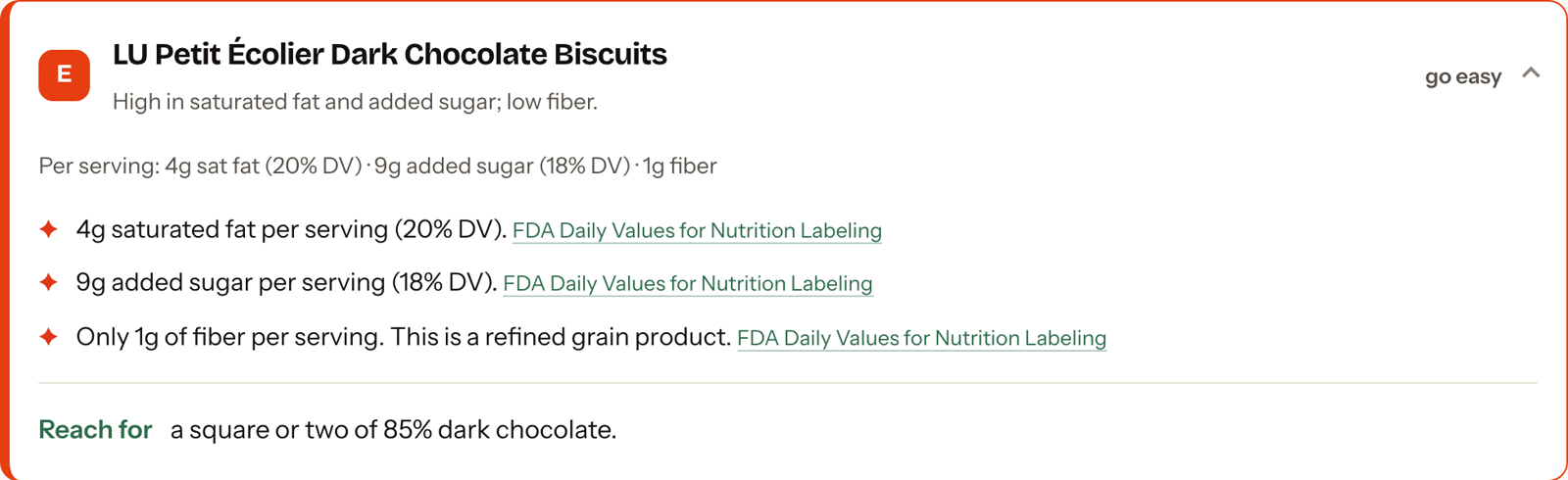
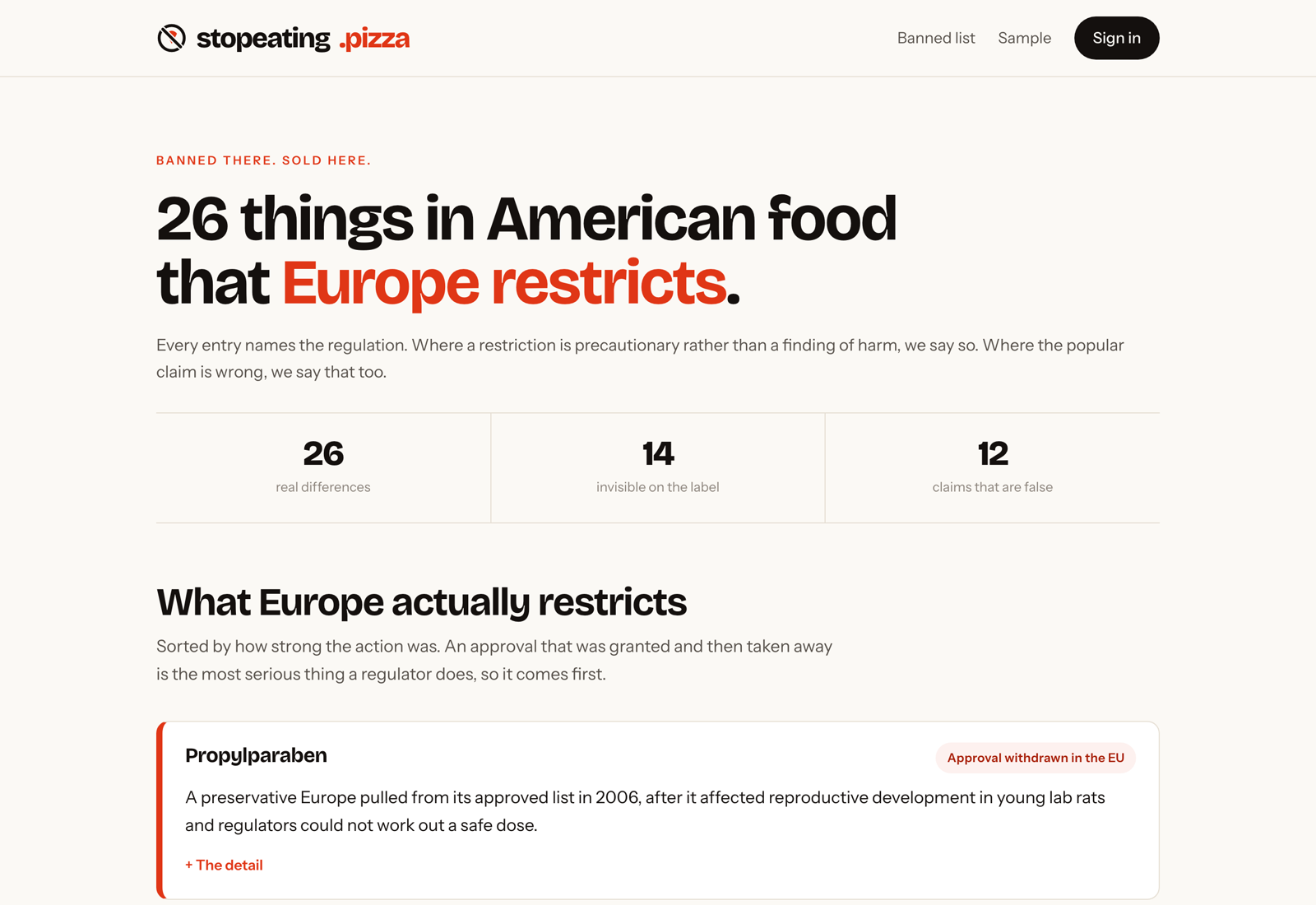
stopeating.pizza reads a photo of your grocery receipt, or a screenshot of an online grocery order, and hands you back a health report. It pulls out every line item, matches each one to real nutrition data, and scores it. You get an A to E grade on every item (the same system the food labels use across Europe), one overall score for the whole cart, the actual numbers behind every flag, one better thing to reach for next time, and a flag on anything in your cart that Europe restricts or bans. The whole thing is built around improvement instead of shame. I wanted it to read like a friend who happens to know nutrition looking over your cart, not a calorie counter yelling at you.
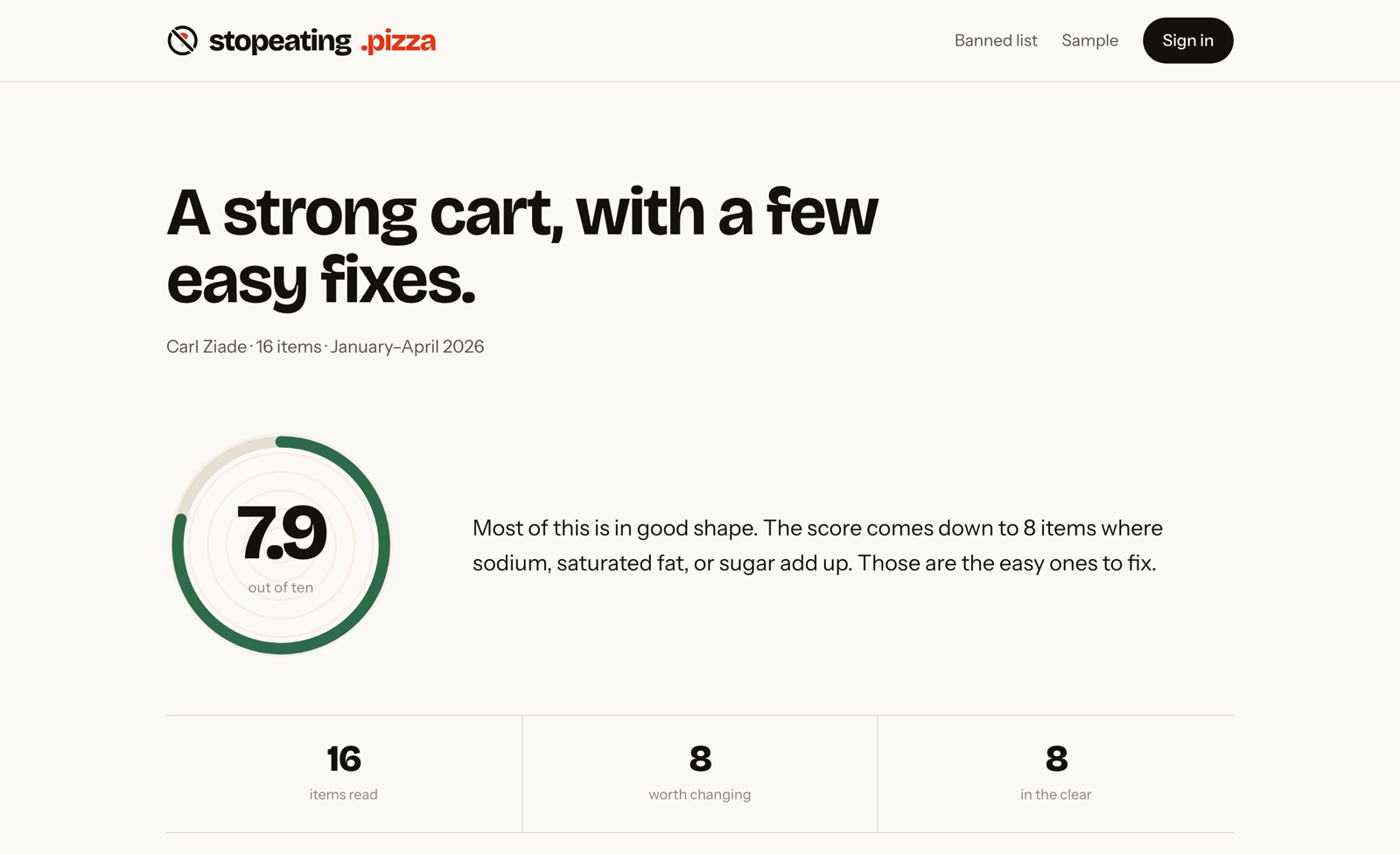
the report
construction
The scoring engine is a standalone TypeScript library. It knows nothing about the web, the database, or who you are: food items go in, scored records come out, and everything it needs (the nutrition databases, the OCR, the vision model) is handed to it as an injected interface. A hard rule keeps cached facts (nutrients, ingredients) separate from recomputed judgments (grades, scores, flags), which is what lets every report stay versioned and reproducible.
Reading a receipt is cost-aware. Free on-device OCR (Tesseract) runs first, and it only pays for a vision model when the OCR is not confident enough. Nutrition facts come from USDA FoodData Central and Open Food Facts, and each product is resolved once and cached, so the second time anyone buys it the lookup is free.
The grade uses the official French Nutri-Score algorithm (the 2023 version). I did not want to just claim it was right, so I wrote a test that runs my grader against Open Food Facts' own published grades: it matches on 100% of 728 real products, and it stays in the suite as a permanent regression test. Building it caught several real bugs in my scoring tables, which was exactly the point.
architecture
The web app is Next.js on Vercel. Supabase handles auth, Postgres,
and file storage, with row-level security so one person can never open another person's report. The
engine lives as its own package in a pnpm monorepo, covered by around 120 tests
written test-first, so a change to the scoring rules cannot quietly break a grade.
Source? It lives in a private repo, since this one is a collaboration. The rest of
my work is on my GitHub.